

a quiet place among the runes · for iPhone
No one hurries here. You arrive with what will not settle into words and leave with a sentence you want to keep.
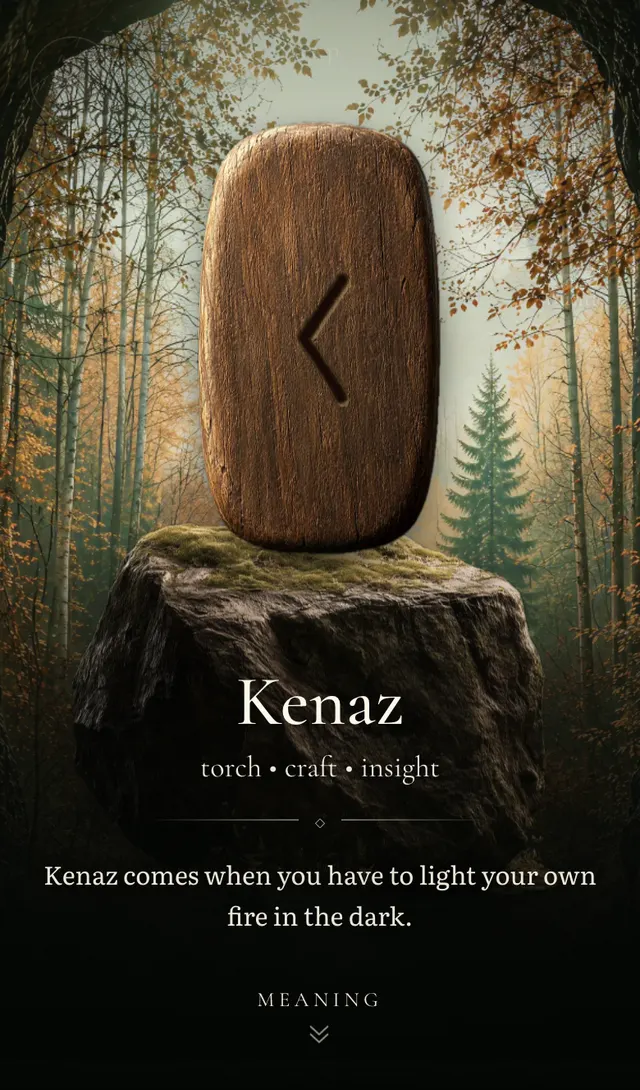
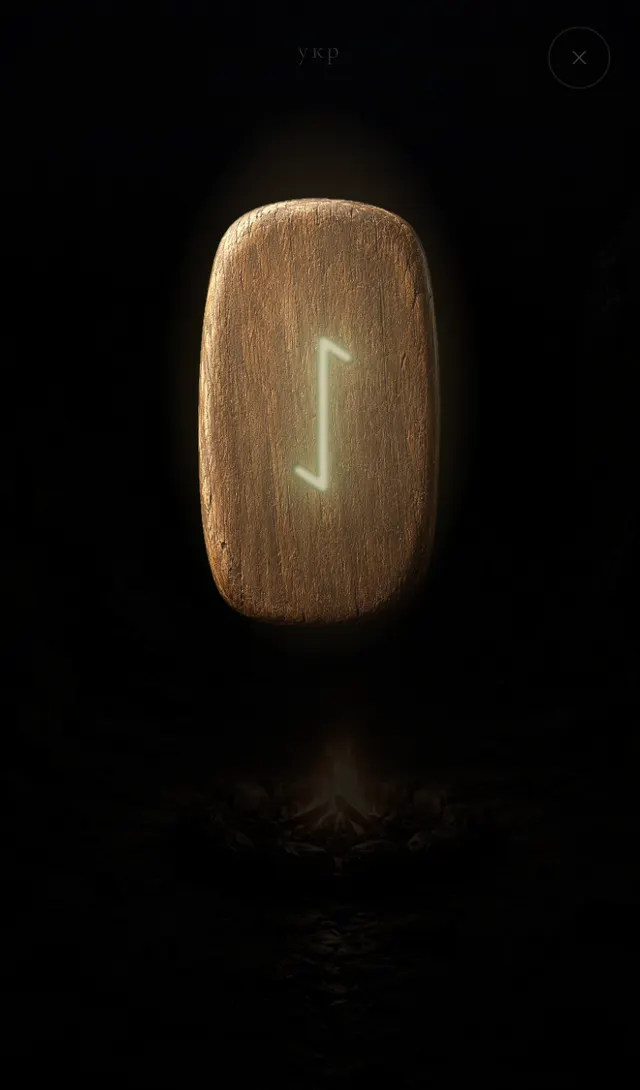
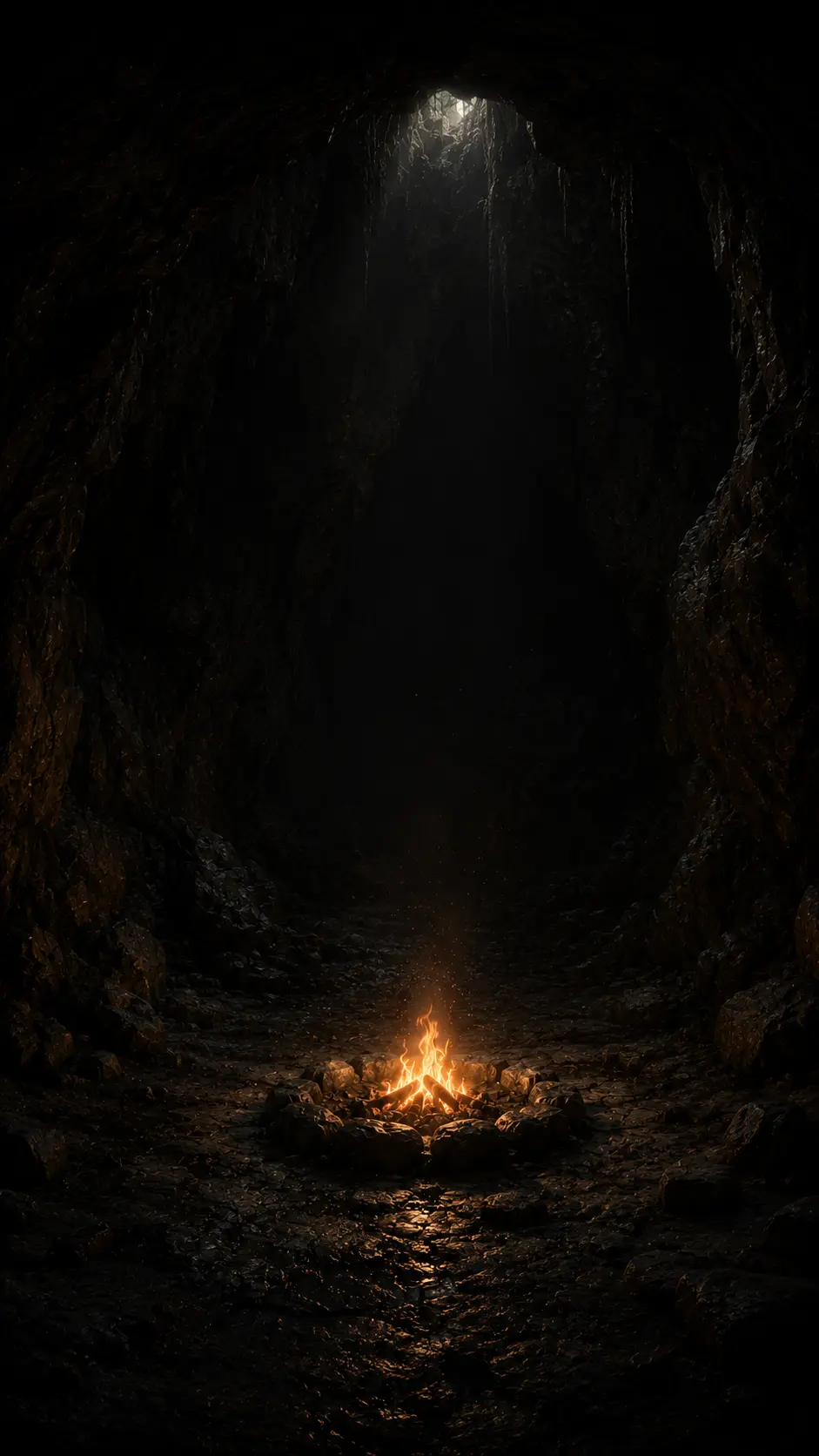
A ritual is a passage
You step into the dark: a cave, a fire and the question you came with.
You draw.
And you step back out. The forest is the same, but there is more light in it. The colours are deeper, and the birds are closer.
The rite gives you the images. You come out the other side carrying your own answer. And from there even the same forest does not look the same.
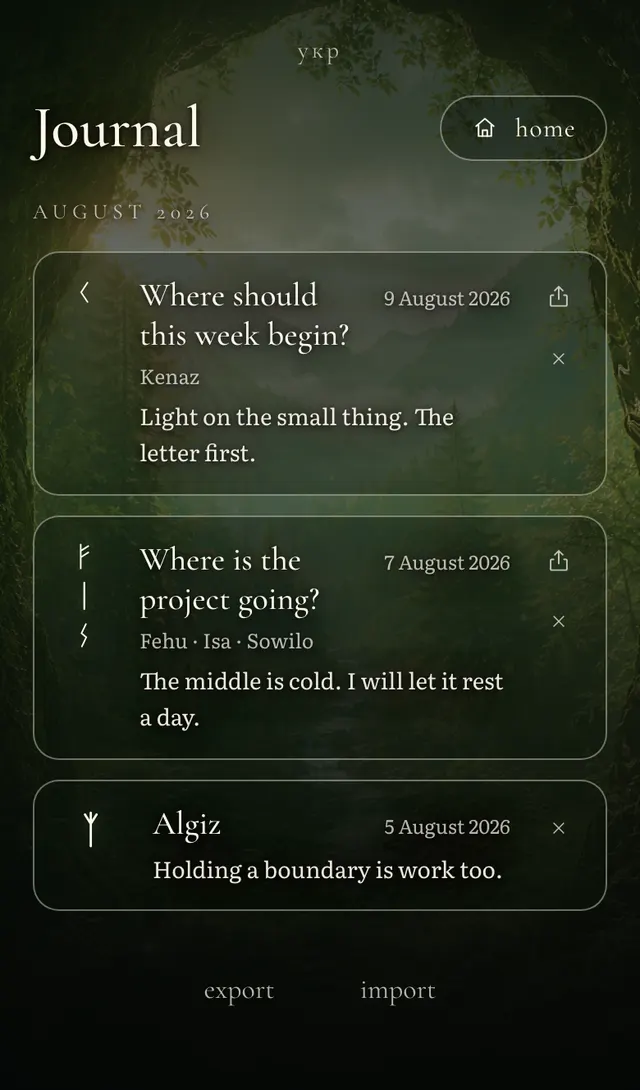
The journal
You read the meaning and somewhere around the third line you recognize yourself. That recognition is what you write down. Right away, while it is still there.
The entry is made by the one inside. It is read by the one who has come out.
A month later you return to the same lines without the emotion that wrote them. And you see not the rune. You see the person who sat with the phone that day. And what was truly happening to them.
That is the whole use of this app. The rest is scenery.
The meanings
Twenty-four runes of the Elder Futhark. The meanings are drawn from the Old English, Norwegian and Icelandic rune poems.
Here is Nauthiz — need. The rune people bring here most often.
Nyd byþ nearu on breostan; weorþeþ hi þeah oft niþa bearnum to helpe and to hæle gehwæþre, gif hi his hlystaþ æror.
Need is tight upon the breast. And yet to the children of men it often turns to help and to healing, if they heed it in time.
The Old English Rune Poem
From the author
I made my first set at eighteen, fifteen years ago. Twenty-five sanded oak blocks with the glyphs burned in. Not as a souvenir, but with a reenactor's curiosity. From the sources I had, I put together a rite and kept it. The shape. The consecration by the elements. The waiting for the right moment.
The blanks are hard as metal. The burning left a smell I remember still. Most of the time went into not hurrying.
That set is still with me. It is the one in the photograph.
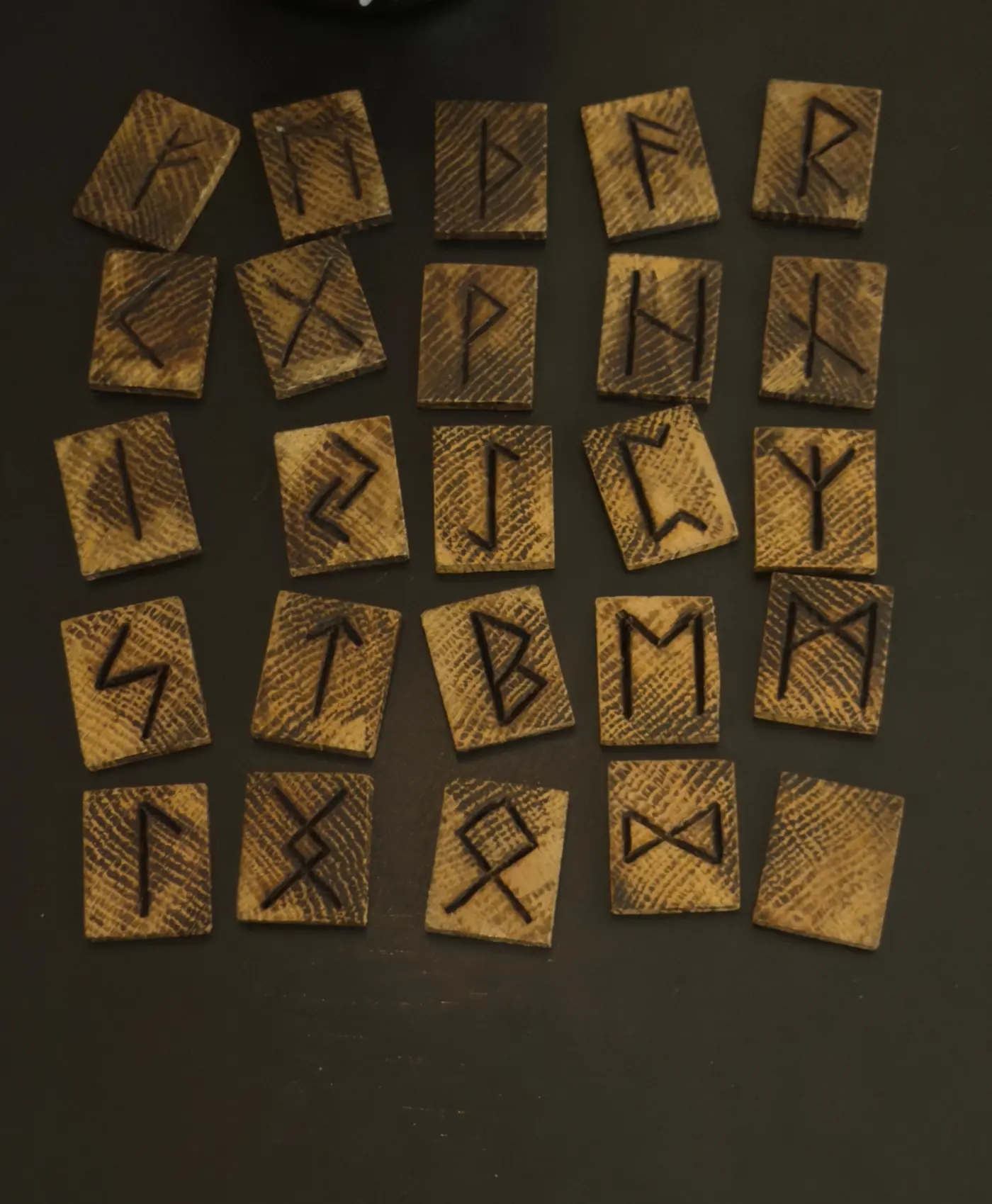
I made this app because I could not find one where a rune was anything more than a symbol.
What this is
One purchase, and it is yours.
Your journal lives on your phone and stays there.
Every meaning was written by a human hand from three medieval poems.
It opens on the rune, and nothing is counted or compared.
Free, and staying free
The app downloads free. A rune a day, free for good. The first rituals are a gift: three that simply work, and three more for the asking. With the first asking one rune becomes yours to keep, once in the app’s whole life.
Then, one exchange
After the gift the cave asks what you can give without harming yourself: time, or gold. Time is a day between rituals, and a day is not nothing. Gold is one exchange, €12.99, shown in your own currency in the App Store, and the whole depth of the cave stays open.
The way software used to be sold, and the way a rune set is bought once and kept for life. The app speaks twenty languages, Icelandic among them, the tongue of the youngest of the three rune poems.
Sources
The meanings of the runes
The Old English Rune Poem · The Norwegian Rune Poem · The Icelandic Rune Poem
The shape of the rite
Arnold van Gennep, Les rites de passage (1909). A rite of passage in three parts: separation, threshold, return.
Where the sources disagree, the choice is mine. The most visible is the rune . The Old English poem calls it cēn, a resinous splinter for a torch. The Icelandic and Norwegian say kaun, a sore. I kept the torch.